The Admirers
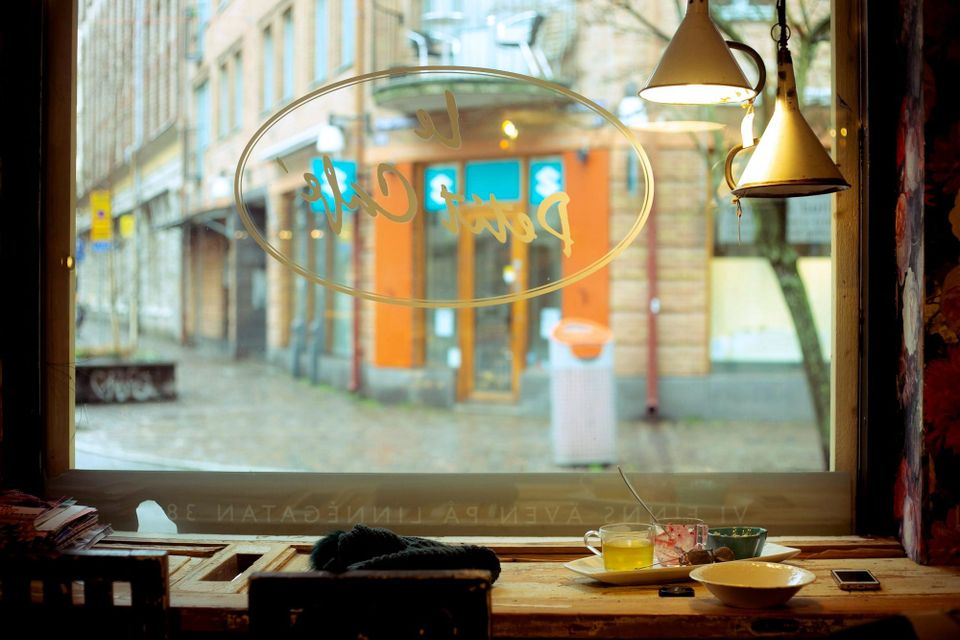
In a renovated old office, now turned into a roadside tea shop, only a few people stop by despite the busy morning rush. A huge accordion window with wooden partitions stretches almost all the way to the shop next door. Between seven and seven thirty in the morning, Mari sits by the window.
A round table acts as a simple work desk: a notebook on the left, pens on the right, and a plastic -wrapped novel on top of the notebook. It’s a windy Friday morning, with no tasks or reports waiting for her, so she might as well finish the novel she had recently bought. A cup of Earl Grey and three peanut butter sandwiches sit in front of her. A perfect breakfast.
The waitress doesn’t need to ask. She simply confirms the order, and Mari nods. That’s how their routine goes. Less like a customer and a waitress, and more like something shared only between the two of them.
The corner spot is hers, seldom occupied by anyone else. The fogged window softens the atmosphere. The view from either side of the glass is unclear. The silhouettes of passing people, including her own, are comforting to watch.
Mari unwraps her novel. She takes a sip of warm tea as she opens the first page and writes her name on it. The black pen moves slowly on the paper. The book looks thinner than the one she read last Tuesday. This is the third novel she has started this month. She usually spends mornings staring at a laptop, even during these calm hours, when people tend to be a bit more relaxed while enjoying their breakfast.
A newspaperman locks his bicycle next to the flower pots in front of the shop. Every morning, his arrival tells everyone the same thing. It’s already eight fifteen. By the time most deliverymen are racing the sunrise, this old man is only just arriving, and all the workers around here have learned to accept it. Once he knocks on the door, like an accidental alarm clock, Mari wakes from her book hangover.
It’s time to go. There are some places she plans to visit. She slips her stuff into her bag. The cashier gives her a usual look, and Mari nods once more. Very brief. Barely a second. She steps out of the tea shop and turns left toward downtown. She can be heading to the train station, the bus stop, another café to read, an appointment, or simply wandering through her day. Mari disappears into the rows of towering concrete buildings lining the streets. And so does her shadow.
And that’s all. That’s the Mari I know. The woman who claims the same corner seat by the window. Even the fog fails to blur her presence. Only now do I realize that I’ve been waiting for her all along. My eyes remain on her until the last trace of her shadow disappears.
Mine is a painfully narrow world. What I have is only a glimpse of her. My own idea of her. Forgive me. I know this may make her uneasy. I know only one hour of the life of someone I long for from afar.
If I ever try to cross this distance to truly know her, will that make me a sinner?
• • •
It’s unbearably hot for eight in the morning. Convenience stores are already packed, which is strange. Some people have already finished their iced tea and fried rice, unusual for a morning when people usually reach for warm drinks. By then, even breakfast no longer feels like breakfast. That’s when you can tell something has already shifted.
For some reason, the heat seems to make people hungry earlier. People flood into restaurants. The bell keeps chiming at the front desk. Menus pass quickly from one table to another. The morning delivery rush comes nearly four hours earlier than it used to.
Summer wears people down. They spend more time on themselves. Restaurants begin offering discounts even during their busiest hours, especially for large groups ordering full meals. Delivery discounts keep online orders flowing through the city.
The summer omelette set becomes one of the most popular choices for those who don’t have time to prepare breakfast at home. Almost everyone in town has tried the well-known soft and buttery omelette rice. The restaurant itself is nearly a hundred years old, passed down through generations, standing just three storefronts.
Like any other summer morning, the staff prepares orders for the office towers downtown, where white-collar workers place large group orders. Around eight, the sound of motorbike engines fills the street as fresh meals are sent out for delivery. The bikes travel around town for about two hours before returning to the restaurant. Once the morning deliveries are done, the men take a short break in the staff room before preparing for the second delivery round, which lasts even longer during the lunch rush.
Some return to the kitchen, others to the washing or packaging area. One of them, the last rider to return, walks to the cashier counter to join the old man managing the flow of the restaurant. The old man never lets him handle the cash register by himself. He pauses to catch his breath after two hours of riding through town under the draining summer heat.
Beside him stands a cracked old window, almost completely covered with papers: certificates of authenticity, news reports, local government awards, faded receipts, photographs of loyal customers still glued there after decades.
Most people will see nothing more than a dusty window, and the old man probably thinks the same. Only a narrow strip of glass remains uncovered between the papers, barely enough to reveal the wide window of the tea shop...
...but summer mornings pull him away from the window.
There he is. The delivery man. The cashier. One of the old man’s ten children. He spends days behind a calculator and a pile of receipts. And for a few seconds, his gaze lingers across the road.
The man unable to speak.
The admirer.
• • •
The old man welcomes the guests with a warm smile. He looks back at the cashier counter, giving a simple hand gesture to his mute son to hand out menus to the occupied tables. It’s only half past six in the morning in an already crowded suburban district. The son takes the customer's order with practiced hands. Finger movements and eye contact are how he speaks to the world. Pedestrians passing by the restaurant can smell the thick, buttery aroma of the omelette.
The staff arrange meal boxes side by side, then put the omelette rice into the boxes in balanced portions, as it should be. The large order comes again. Nothing new. A must in the morning. The son and the three other riders have grown used to the city's heat. Engines roar. The old man. The father. He stands by the front door and watches until they fade into the main street. He wishes his son a kinder world. No noise comes from that side of the road anymore.
At seven twenty, Mari arrives at the tea shop, securing her usual corner. A glass of iced lemon tea soon arrives at her table. She continues the novel from last week as she opens her notebook to the latest entry, where she writes down a summary of the fourth chapter. Saturdays are for free time.
An orange skirt and a tassel bag complete her attire. The glass seems a little clearer than it once was. Maybe the missing fog has something to do with it.
Mari doesn’t have a specific plan for today. Maybe the novel on her lap will take up whatever time she has. Her fingers rest between the pages as her lemon tea slowly turns watery. The newspaperman comes at his own pace, as always, but on Saturdays, it no longer feels like an alarm, for Mari doesn’t move even an inch.
Mari has another glass of mango juice with its ice long melted into nothing. Something feels different about her today. The calmness is gone from her face. The novel remains open to the same page for the next thirty minutes. Where do her eyes wander, if not to the words? Mari glances at the clock on the wall. She may stay longer on weekends, with no schedule waiting for her.
By three minutes to nine, she can’t bring herself to turn the page. Her thoughts are elsewhere this morning. Even reading now feels exhausting to her. She slips the book into her bag. She chooses her leather bag, hoping it will brighten her mood, but it doesn't. She stares at the ceiling. No. It’s just her eyes. Where does her mind go?
“Would you like brunch?” The waitress, who has been quietly observing Mari,
approaches her table with an extra plate of vanilla biscuits. She looks concerned seeing Mari still there past nine, though she doesn’t want to seem nosy. Mari shakes her head once, offering a small smile. The waitress stands there for a few seconds before leaving her to her silence.
The heat refuses to go away even after nine. Mari hates summer. Not every side of summer, not every face that represents summer. Summer lets her enjoy fruity popsicles more than usual. Bright neon colors somehow feel right in summer. No judging eyes. Burning pavement. Sticky air. Towns too loud. Too demanding. People get angrier. Hungrier. Money disappears too fast. Queues too long. All things she can still tolerate.
She tells herself it once started as curiosity. But curiosity should have faded within weeks. It wasn’t enough to explain why she kept returning to the same spot in this very tea shop. The truth was heavier, or something a little sadder, yet harmless to anyone. Through the large accordion window, stealing glances between page turns. Perhaps every line she wrote in her notebook was only another excuse to look outside, as though searching for something to write about.
Will he ever notice the woman who sits in the same corner?
Mari usually has to leave at eight fifteen. In the rain. In the fog. Silent mornings. Freezing mornings. The weight of an unfinished glance. But today, Saturday, she can stay longer. How about the other days? Summer is still far from over. Summer steals something from her. She takes a look across the road. The narrow gap in the window remains empty.
There she is.
Another admirer.
• • •
A projection. A version created by the mind. One-sided intimacy. An emotional world shaped by fragments. Fragments of time. Fragments of presence. What she wears. What she eats. What she reads. How to turn an hour into forever. Never knowing that on the other side of the road, she had always been waiting for him, too.
The roar of engines becomes a way of saying goodbye. Just like the gentle ringing from the newspaper man’s bicycle. Summer strips everything bare. Nothing is concealed. The clearer the window, the less the truth can hide. Time weaves its slow magic, raising walls too strong for love to pierce the glass.
They fell in love with the phenomenon, or perhaps the fantasy. Measuring all the chances rather than leaving them locked tight, living in lifelong regret. Blame summer for losing something they never even started. Trapped in their own worlds, without knowing how to build a bridge between them, when the world itself is only a road and a piece of bravery.
Parallel longing. What a beautiful term, isn’t it?
You are not a sinner. Only an admirer. As she is, in her silence. All that remains is to wait for summer to end. No torture. No yearning left to carry. The glass will bury it all. And fog, and rain, they will stay between you ...
...where summer could never.
Bonniela is a writer of poetry and short fiction who also creates collage art. Most of her work explores themes of nature, memory, and longing.




Member discussion