Cosmic Debris
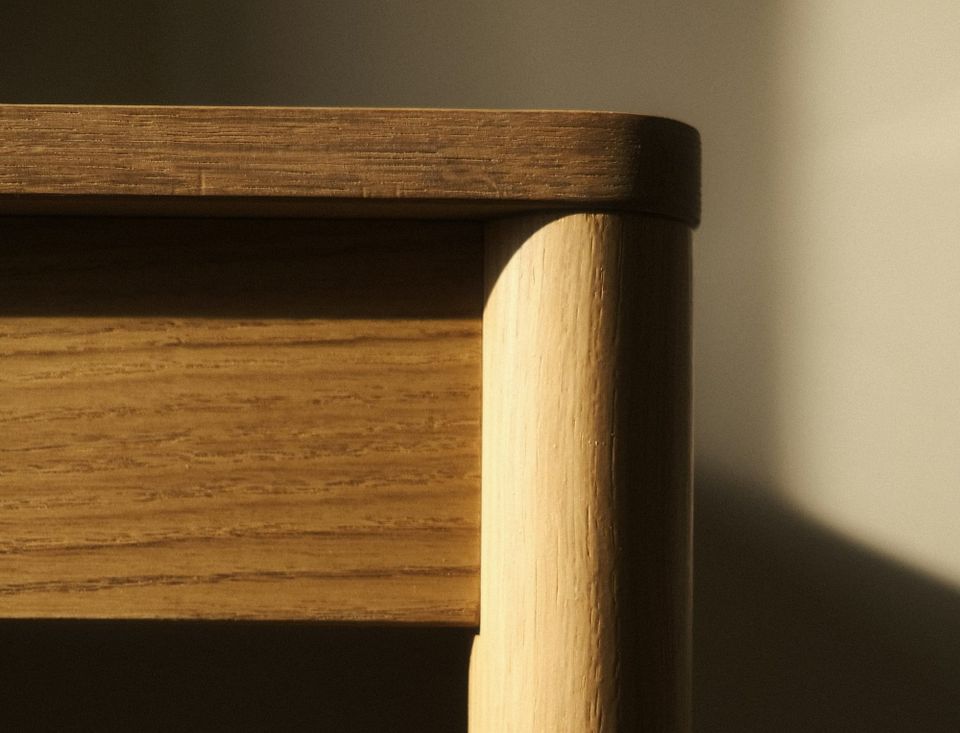
On his tenth wedding anniversary, Mr. H. became a table. Surprised as she was, Mrs. H. considered this a great improvement.
“Finally,” she said, “he can be of use.”
Indeed, the longer Mr. H. remained a table, the happier Mrs. H. became. No longer was her husband late for family dinner. No fat, emasculating tears would fall upon his plate. No sarcastic remarks would make her go red in front of the kids. Best of all, she knew when she turned out the lights, he wouldn’t follow her to bed, stiff with the self-righteousness of a martyr.
Every night had been the same. They’d had the conversation a thousand different ways, and it always ended in frustration for both parties. Oh, Mrs. H. would try her best to ignore him. She’d sit on her side of the bed facing the wall and unbraid her hair. But always, her husband would do something dramatic, like sigh, and staying silent would be impossible.
“You know I won’t want to do it if you keep acting so needy.”
Unconvincingly: “I don’t need you. I don’t even want you anymore.”
“Uh huh.”
After that, silence.
Perfect. Eager to end the day, Mrs. H. would slide under the covers.
“It’s just that—”
Oh, here we go again.
“I feel like a nuisance. Like I’m always in somebody’s way, in my own house.”
“Egil,” she’d say, not bothering to roll over to face him, “keep picking at a stigmata only you can see, and you’ll have the wounds you imagine, but it won’t be my fault.”
“It’s just been so long . . .”
Oh my god, go to bed. “I’ll add another hash mark to the wall.”
“Sometimes,” —here he’d affect a philosophizing tone— “I feel unhuman. Like I don’t even have a body anymore. You know?”
“Well, that’s good then.”
“That’s good?”
“Yeah. No body, no unmet needs. No conflict.”
“That’s great for you.”
“Didn’t you just say you don’t want me anymore, either?”
No response.
Good. Pretending that that would be the end of it, Mrs. H. would try to sleep.
“But I miss being connected.”
“Hm?”
“Connected. Not even with you specifically.”
“Mm.”
“I can handle being your roommate, your co-parent. The person who drops you off at work when your car’s in the shop.”
“Egil, it’s a weeknight. Go to sleep.”
“But I’m just, untethered. Drifting. Years of trying to figure out who you want me to be, how I can do everything right so you’ll stop resenting my presence—I’ve forgotten who I am. Who I want to be.”
"Great, so you've solved it. Now, sleep."
“One day,” he’d threaten, “I’ll stop letting you walk all over me. You’ll come home, and I’ll be entirely different.”
But he never changed. Until he became a table.
In another pocket of spacetime, a crew of unearthly life forms were dealing with their own problems. Since these beings were genderless and did not require cooperation to reproduce, the emotional stakes of their issue were arguably much lower.
“High-ranking one,” hailed the being in charge of calibrations.
“Attention diverted,” the leader grumbled.
Since nothing evolved without a sense of self-preservation (except, of course, some earth spouses), the calibrations officer downplayed the problem.
“Our calculations may be less accurate than projected,” they admitted.
“Demotion pending,” replied the leader. “By how much?”
The calibrations officer gave an estimate. The units he used are untranslatable, but the gist might be understood as “a fraction of a tiny itty bitty smidge.”
Relieved, the one responsible for safely transporting the artifact diverted some attention from the containment cone, which, at great expense, mimicked the object’s natural habitat. “Rebuke,” said the artifact specialist. “I thought you meant we’d miss the planet by a few solar systems, or arrive long after the inventor species is extinct.”
“Oh, no, nothing like that,” the calibrations officer hastily replied.
“Demotion aborted,” said the leader. “No further interruptions. Attention reverted to my entertainment.”
In the cone, the artifact floated happily on the earth water. Its single, striped lung, which fascinatingly served for propulsion, was healthy with air.
Regarding it, the calibrations officer felt guilt. They had concerns, pesky ones, but decided to stew privately.
The kids took a bit longer to adjust to their father’s transformation. None of their friends’ families had experienced something similar, and it had been a mistake to mention it at school. In many ways, though, life was easier with their father as a table. His emotional well-being had revolved around his wife, provoking dangerous tides that threatened the stability of the household. But not now. When Nils brought home a report card littered with C’s and D’s, the table didn’t say, “I knew it! We’re failing them!” When Alice told her mom she didn’t want to sign up for summer dance class, the table didn’t interject, “But girls should learn to be comfortable in their bodies.” Mrs. H. didn’t say, “Sure, blame my dad for not making me take dance. It’s always someone else’s fault.”
In short: it was wonderful.
Free from the push-pull of expectation and resentment, Mrs. H. wore makeup again, and heels. One day, at the hallway mirror, she stopped and admired herself.
Alice, who saw everything, noticed the light had returned to her mom’s face. “You’re beautiful, Momma,” she said.
Mrs. H. tensed, but relaxed quickly. She crouched to be eye-level with her daughter. “That means so much,” she said, “coming from a pretty girl like you!”
Alice grinned. She knew she was beautiful, even while her front teeth had yet to grow in.
From the hallway of his room, Nils, who was always watching, observed. Self-revulsion formed in his throat, a small, hard kernel. Maybe beauty was only safe for women to acknowledge in one another. Maybe it was maleness itself that made everything so wrong.
Standing again, Mrs. H. noticed her son’s somberness. Suddenly, she had an idea. “Let’s make cardamom bread!” she said.
“Really??” Alice clapped her hands.
Even Nils put his worries aside.
The table was entirely supportive. It made no complaints when Mrs. H. helped the kids roll out the dough. It didn’t say, “I get it. You want to get fat, so I’ll stop being attracted. It’s useless. I’m always going to want you, and you’re always going to hate me.”
Self-entwined, the cardamom bread twisted over itself like Vigeland’s Monolith. In the oven, it expanded like the space between stars. It tasted like peace.
When the research vessel surfaced in the timestream, the blue planet appeared exactly where it had been when they’d retrieved the artifact. The crew performed celebration. But the calibrations officer noticed changes. The natural satellite still orbited the planet like a faithful spouse, but other objects, blinking and metallic, made closer revolutions. Additionally, earth’s dark side was studded with lights—surface constellations that had certainly not been there before.
“Initiate return procedures,” said the leader.
The artifact specialist drew 110% of their cognitive resources as they carefully guided the artifact into the tractor beam. A live view of the target coordinates appeared in the ship’s retina. Where fjord water had been diverted, a house stood alone.
The calibrations officer said nothing.
The order was given: “Release the artifact.”
The crew watched it drop.
If a longship fell out of the sky and landed on your house, splitting it in half, you might expect your routines to be disturbed, at least in the short term. But when it happened to the H.'s, it became yet another thing they didn’t acknowledge.
Mr. H. had a reasonable excuse. He was, naturally, still a table, and no longer in the habit of complaining. But Mrs. H. had to go to great lengths to carry on as normal. Nils said he couldn’t sleep because of the cold air in the house.
His mother was unsympathetic. “Grow some hair on your chest. Girls don’t like whiners.” Alice cried because the family cat, having exhausted places to sit in the broken vessel, ran away.
“It was wrong of her to leave,” Mrs. H. agreed, “but you must make your own happiness. You can’t rely on someone else.”
As if determined to keep living this way, she refused all offers of help, as well as all demands. When baffled news crews, meteorologists, professors, conspiracy theorists, neighbors, preachers, and archaeologists showed up at her doorstep, Mrs. H. told them the same thing. “Every couple deals with this from time to time. We’ll get through it.”
At night, she consoled herself with her lack of culpability. It’s not my fault, she’d tell the stars through the giant split in the roof. Sometimes, we have to accept what we’ve been given, and that’s that. This conviction was bitter, a quality Mrs. H. excused as an attribute of wisdom.
Light-years away, the stars were keeping their own company. They did not ask Mrs. H., Why do you insist on making your one small life even smaller? She would have to ask herself, or not. Meanwhile, the kitchen was cold and damp. Mr. H. was used to it, was used to the rot inside him. His plight would also receive no intervention from the stars. They didn’t say, Desire accepts no bargains, but it always bends toward mystery.
At least the longship a few meters away creaked companionably in the wind.
The calibrations officer’s ethics agonists and antagonists had become decidedly unbalanced. Desperate, they hailed the artifact specialist.
“Covert communication request,” they said.
The artifact specialist did not promptly accept. The calibrations officer had to wait while the records of their likes and dislikes were hastily appraised.
“Compatibility score is low,” concluded the artifact specialist. “Friendship rejected.” The calibrations officer emitted a scent to retain the artifact specialist’s attention. “Addendum,” they said. “Subject is work-related.”
The artifact specialist performed a dance of skepticism. “Since when do work-related communications need to be covert?”
Desperation (and no small amount of profanity) seeped into the scent cloud surrounding them.
“Whatever,” the artifact specialist acquiesced. “Covert channel opened. Be brief. And don’t be weird.”
Nervously, the calibrations officer fiddled with their external intestines. “You’re an expert in Intertempus Research Law, confirm?”
The artifact specialist said, condescendingly, “I have a research doctorate.” That’s a waste of time on any planet, thought the calibrations officer, but they only said, “So . . . I think . . . I could be wrong . . . but I believe we’re required to return the artifact to the inventor species within two generations of its creation. Confirm?”
“Obviously. We’re not the British Museum.”
The calibrations officer did not ask what that was. It was irrelevant.
“Well, it seems we forgot to carry a one, so our spacetime coordinates were off.” “Not significantly.”
“I’ve run the numbers. We were exactly a thousand years too late.”
The artifact specialist danced their contempt. “A thousand years? That’s nothing!” “Not to earthlings,” said the calibrations officer. “As you well know.”
The artifact specialist had heard enough. They gathered all their strength and emitted a ghastly smell of intimidation.
“What do you suggest we do, huh? Oh, I guess you think we’re made of money? This little research vessel? We can just pop in and out of the timestream like it’s free?” “We’ll lose funding if we don’t make this right.”
“Exactly! We’ll lose funding.” The artifact specialist turned away. “I’m not going to risk my career because of your mistake.”
“But—”
The covert communications channel abruptly closed.
Mrs. H. slalomed oneiric slopes, realized she had no skis, and woke. The next night, she dreamed herself driving, until she remembered her car had no wheels. The theme of lack stitched through everything like red embroidery: unmistakable in the dark.
Up early, before her kids, she shared these things with her husband over coffee. “It’s so funny,” she said. “Isn’t it funny?”
The table made no reply. The longship was supportively mute.
Then, before anyone realized it, summer was over. The snow fell early that year. Concerned for Alice and Nils, Mrs. H.’s sister staged an intervention.
“Stay at my house,” she urged.
But Mrs. H. insisted, “There’s nothing wrong with mine.”
Her sister gestured emphatically at their surroundings. “There’s literally a Viking ship in your living room. Your house is split in half, and any day, what remains standing could collapse. It isn’t safe!”
“Affection isn’t a load-bearing wall,” was Mrs. H.’s argument.
“What?” said her sister.
“What?” said Mrs. H.
Despite her wishes, Alice and Nils left with their aunt. They’d pleaded and cried until Mrs. H. relented. With them gone, the wind seemed crueler. The snow fell incessantly. Eventually, she had to take shelter under her husband. She draped blankets over the table, weighting them down so they wouldn’t blow away.
“I tried, too, you know,” she said after a long silence. Her words hung in the air, small clouds of ice. “You never understood me.”
“I understood you just fine,” she continued after a minute. “But you were so obnoxious and obtuse, I didn’t see the point.”
“No, contrary to what you think, I take no satisfaction in your suffering.”
“Why didn’t you, I don’t know, try differently?”
“I shouldn’t have to explain it. It shouldn’t be my responsibility.”
Mrs. H. noticed the tips of her fingers turning blue. Belatedly, she wondered if she could make it to her car, but she was scared to leave what little warmth she had. She curled and uncurled her toes, relieved to still have feeling.
“What was it you used to say? ‘Come closer; I’m warm’?” She attempted a smile. “I could really use that warmth now.”
A chilling gust surged through, a train in a tunnel.
Mrs. H. laughed miserably. “If only I’d been more like you, and you more like me. Then maybe...”
“But it doesn’t matter. You’re a table, and I’m probably hypothermic.”
She exhaled slowly. “So, I guess we made it. To the end.”
“That’s kind of beautiful, isn’t it? Isn’t that the best a couple can hope for?” The table made no response.
Mrs. H.’s voice grew small. “There’s no chance of undoing things, is there? Of turning you back? We could start again, we—”
Again, nothing.
In the calibrations officer’s memory, the upsetting episode of the blue planet has been entirely overwritten. Their party hadn’t been audited, so their failing had no consequences. The galaxies continue to spin. What was, was; what wasn’t, wasn’t; and there’s room for all the wishes in the world in the space between the stars.
Jenna V. Wray (née Sumpter) edits for Kelsay Books and The Orchards Poetry Journal. Her work appears in Caesura, New Welsh Review, and elsewhere. A member of the WAY Writing Group in central Arkansas, USA, she’s received multiple 2025 awards from White County Creative Writers, a BFA from the University of Evansville and Harlaxton College, and a much-belated OCD diagnosis. Find her on Instagram/Substack/X @JVSReads.



Member discussion