Artist Feature Interview: Tamizh Ponni VP
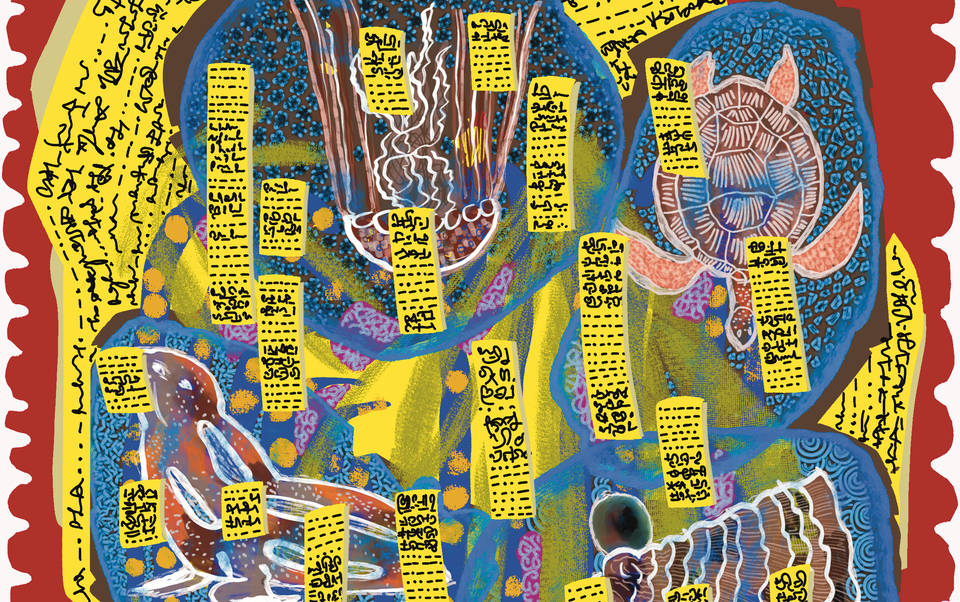
Housebound Magazine's next feature artist is Tamizh Ponni VP. This interview sheds light on their creative influences, taking up the challenge of cartoon art, harnessing (rather than sinking into) nostalgia, and how the role of the artist crucially pokes holes in utilitarian tech.
As a creator of both written and visual art forms, how do you mesh/meld/weld your various creative channels, personally and/or professionally speaking?
My notes app is the first stop for all my little sparks of inspiration. Choosing between art and literature takes a bit of time. I avoid working on two pieces simultaneously, as it contaminates my thought flow. These creative paths collide organically. An 'aha' moment arrives when I combine my sketches and text to bring out new perspectives.
I also love using mixed media to construct both conventional and surreal pieces. There's something empowering about bringing diverse elements together to form a cohesive piece, like creating order out of chaos.
Out of curiosity, do the titles for your artwork(s) precede the visual, or is the title a finishing/last element in the process?
When an idea strikes, art is always my first choice. With art, I don't have to worry about syntax or semantics. I pick up my tools and paint all day. However, writing takes time, much like sculpting a stubborn rock. I wait for my everyday experiences to shape and refine the story. A paragraph that sounded exceptional the previous night might sound ridiculous the next day. Once the pieces are individually complete, I put them together like a layout designer. It's so much fun to play matchmaker and come up with a common title for them.
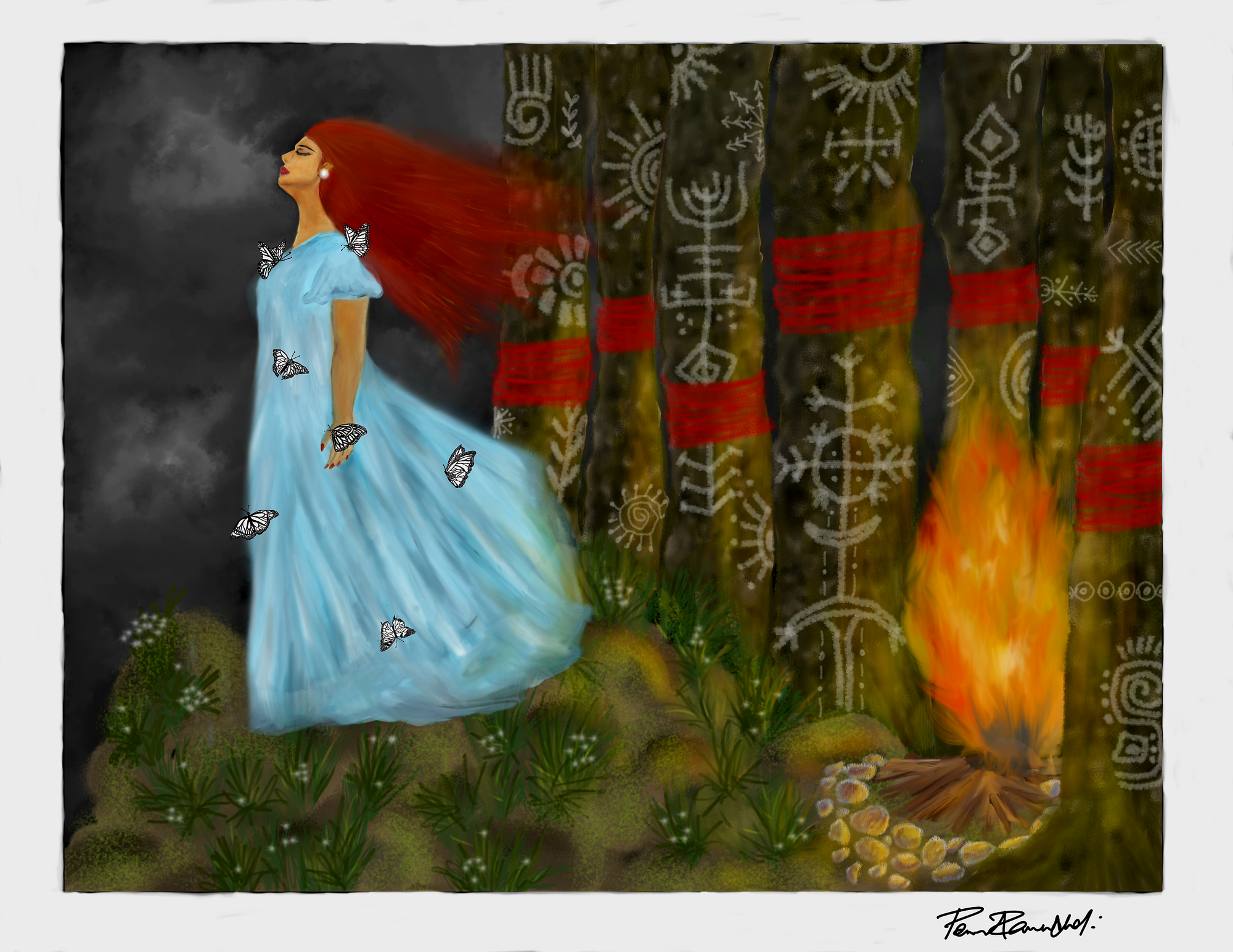
Cartoon art as an illustration style carries a deep, historical power in terms of activism, but also has a signature playfulness and levity. What drew you to this medium, and to single-panel cartoons, in particular?
Well, I have to give credit to The New Yorker. It's still a dream of mine to be featured on their platform. What makes cartoons so fascinating is their ability to simplify complex concepts. They're the OG minimalism. On the surface, it might look like scribbles and shapes, but the process is pretty tedious. I'd say it's even more exacting than abstract art. But I love a challenge. Sending a hard-hitting message within limited spaces and design elements is so cool. My brief experience managing social media platforms for a few political institutions helped me understand the mass impact of cartoons. And yes, art is absolutely inseparable from activism.
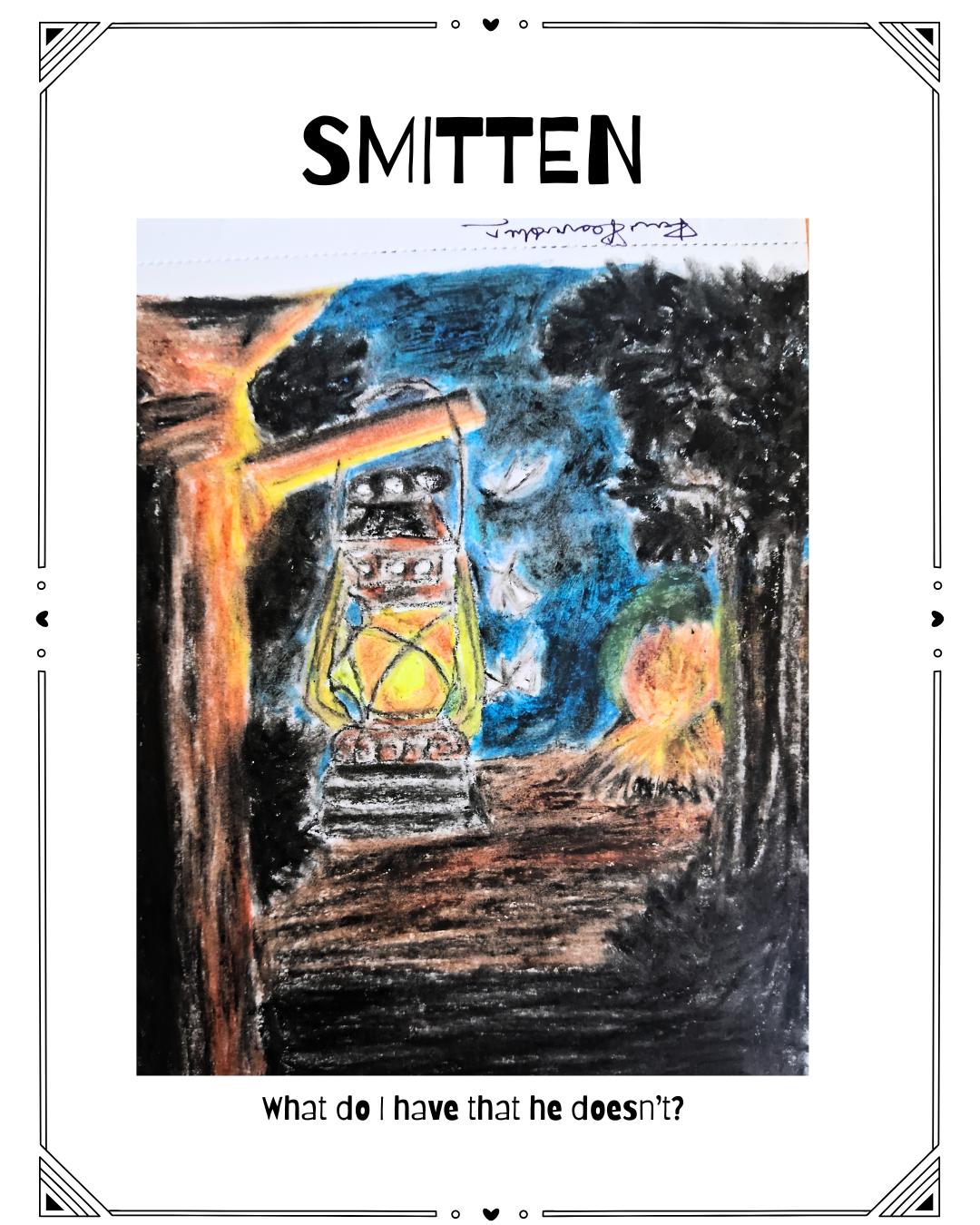
Housebound was made in answer to the power of nostalgia. Do you find nostalgia to be a gift, a burden, a danger, or something else in your artistic life?
Nostalgia is a double-edged sword that should be handled with care. We need to decide how far we want to travel down its road while hunting for concepts. It can quickly turn into a dangerous bog and sink our perspectives. So, balance is the key. I've consciously compartmentalized and buried a few happy memories to move on, while keeping the melancholic ones within reach so they can guard me against backsliding. Now I can make art without letting it consume me and also enjoy the process. Because in retrospect, I don't want my works to invoke pain or sorrow. It'll then be like looking at your children with regret.
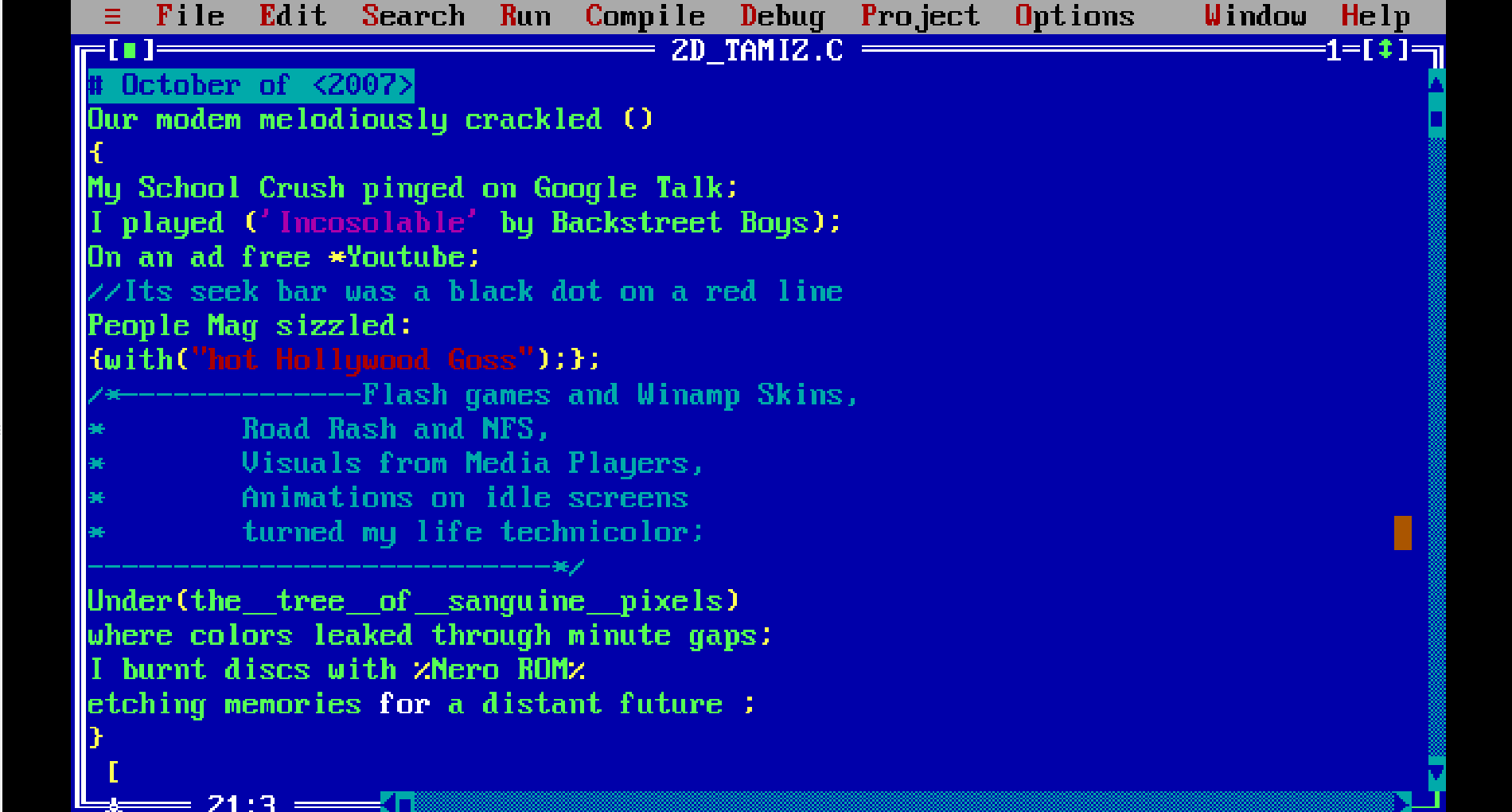
Your work, “Function Call,” captures that early Internet winsomeness. Early tech imagery and Y2K have seen a contemporary resurgence as Internet “aesthetics.” What do you consider the role of art (contra AI) to be in employing these “retro” digital landscapes? Can art, ideally, help us deprogram the algorithmic, consumerist structure of today’s existence?
Such a great question! The Truman Show blew my mind as a child. Everything we know about the universe is designed and run by algorithms. Each entity is programmed to play a specific part in this massive project. All our technological advancements are cheap replicas of nature. Form is just as critical as function.
No matter how serious or utilitarian we want technology to be, whimsy always wins.
People who make art on spreadsheets, Word processors, and coding terminals show we yearn to break free from rigid rules and have fun. Art has the superpower to seep through the cracks of dogmatic structures and tell the world, "Chill! It's not that serious!"
What/who would be in your collage of creative influences (artists, writers, directors, musicians, acquaintances, animals, you name it)?
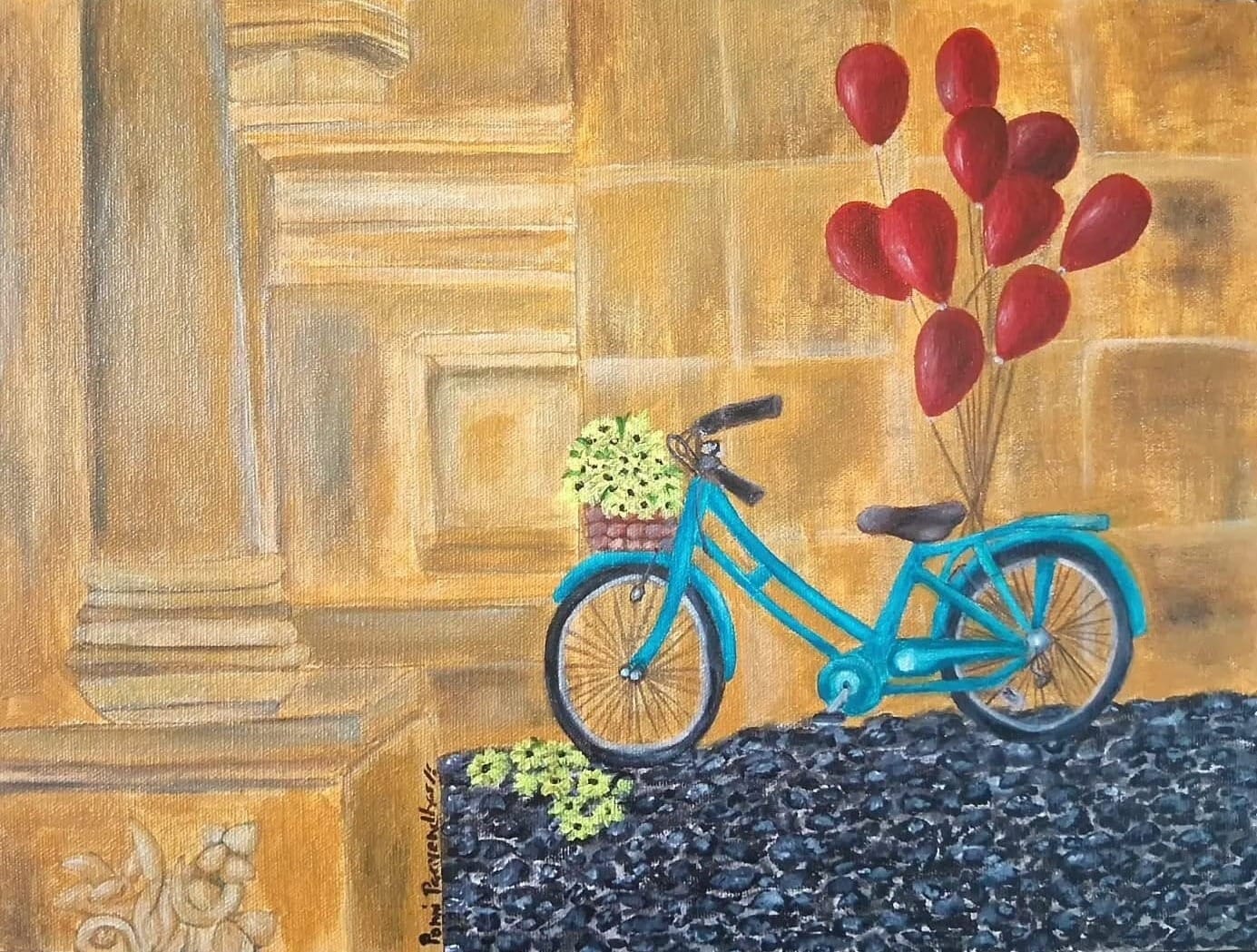
I have countless entities to thank for feeding my brain. Off the top of my head, Da Vinci is the GOAT. Wish I were friends with Frida Kahlo and Maud Lewis. They both made art purely driven by raw emotions, without seeking external validation.
Works by Tamil artists like Maruthi and Hasif Khan were among my earliest inspirations. Papilla Estelar by Remedios Varo changed my life. I also love the work of architect Bjarke Ingels and graphic designer Paula Scher. Kensuke Koike is amazing when it comes to collage art. Will Santino, Sarah Anderson, and Tango Gao are my favorite illustrators. I can watch David Lynch and Ethan Hawke talk about art and life for hours.
What three words would you use to describe your journey as an artist (so far)?
Earnest, Cathartic, and Imperative.
In that same vein, what three words would you use to describe ‘home’?
Enigmatic, Transient, and Feminine.
Is there a particular work of yours that you’re especially proud of or felt was the most cathartic (or challenging) to complete?
I wrote this poem for my mom when she was going through a health crisis. It was a time when art was the only therapy I could afford. At the risk of sounding dramatic, I can confidently say putting this one out saved my life.
Tamizh Ponni VP is a stoic art buff who loves literature, visual arts, and music. Tamizh's articles, poems, stories, and paintings have been published in many anthologies, digital journals, and educational blogs. Tamizh spends most of her time painting, reading, writing articles, stories and poems, playing piano, and watching documentaries/movies.
Member discussion